
In Jingdezhen, the kiln fires have never gone cold. For a thousand years, craftsmen's hands have coaxed clay and flame into the timeless soul of porcelain.
Today, on this same ancient ground, a new kind of forming is underway — not clay meeting fire, but light meeting metal.
Setting Out from the Porcelain Capital: A Strategic Bet Years in the Making
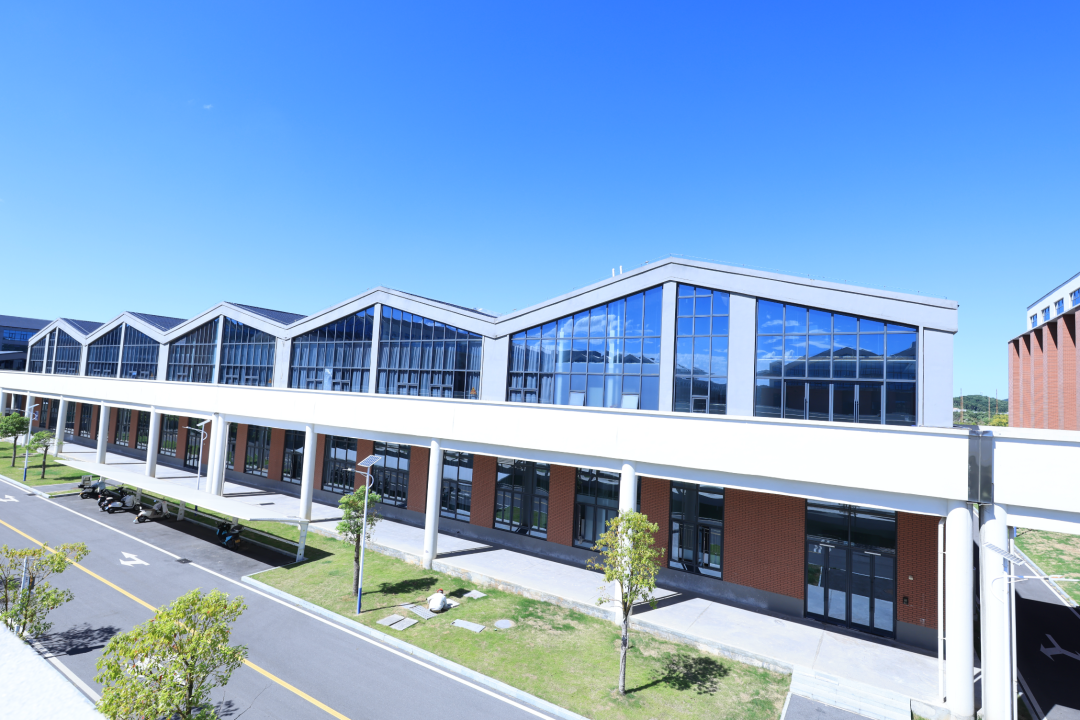
In October 2024, ORG and Cuboid Technology Co., Ltd. signed an investment agreement for a new energy battery structural components project in the Jingdezhen High-Tech Zone. That same month, ORG signed a separate investment cooperation agreement with SVOLT Energy. By early 2026, Jiangxi Aoku New Energy Technology Co., Ltd. had officially commenced production — more than a year from signing to start-up. This was no exploratory pilot; it was a carefully orchestrated strategic commitment.
In May 2026, ORG and Cuboid Technology made a joint appearance at CIBF 2026, presenting a lineup of core products — prismatic battery top caps, aluminum casings, cylindrical battery top caps, and blade battery top caps — that generated significant buzz across the industry. To date, 26 patents have been filed, with 19 already granted. Products are now being supplied to a growing roster of battery manufacturers, including SVOLT Energy, Welion New Energy, and Dejin New Energy.
The Production Line Speaks for Itself: A Fully Automated Industrial Symphony, Running Around the Clock
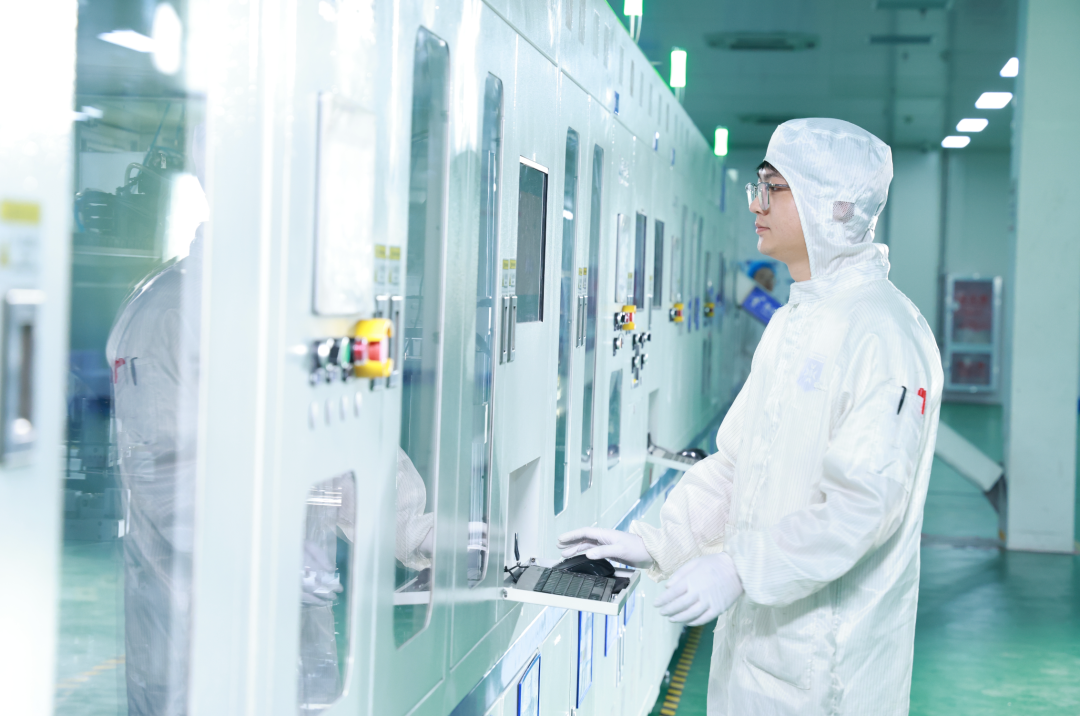
Step inside Aoku New Energy's dust-free workshop and the scale becomes immediately apparent. Spread across more than 3,000 square meters of modern floor space, four fully automated battery top cap production lines run at full capacity around the clock. Stamping presses punch, robotic arms sweep, laser welders fuse — the rhythm never stops, and finished top caps roll off the line in a continuous, relentless stream. According to staff on site, order books are full, with the plant expected to maintain this pace of full-capacity output through the end of next year. Built on a straight-line layout with a modular design and robust flexible production capability, the facility has already reached a monthly output of 1.2 million units — with room to grow.
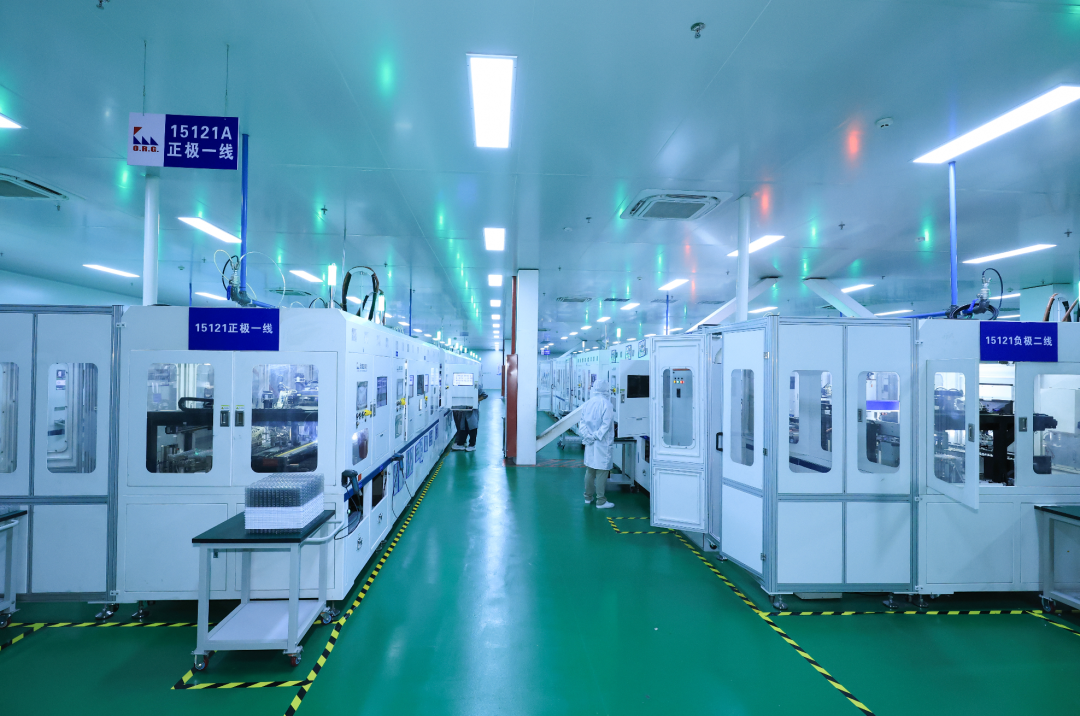
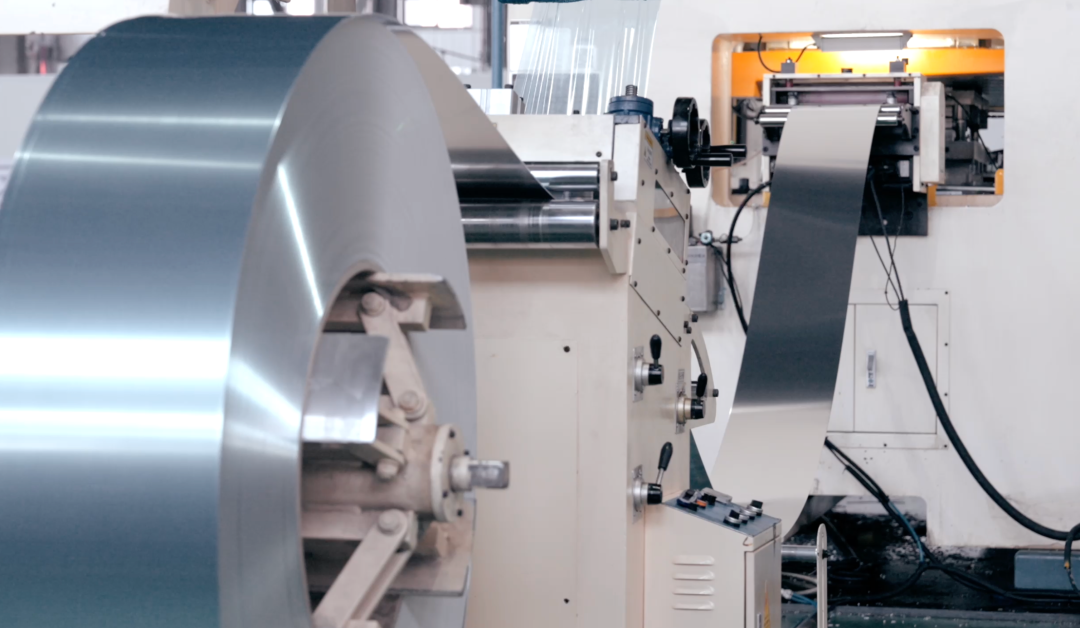
An array of 500-ton and 200-ton precision high-speed stamping presses, each paired with dedicated progressive dies, handles the single-pass forming of aluminum coil stock with speed and consistency.
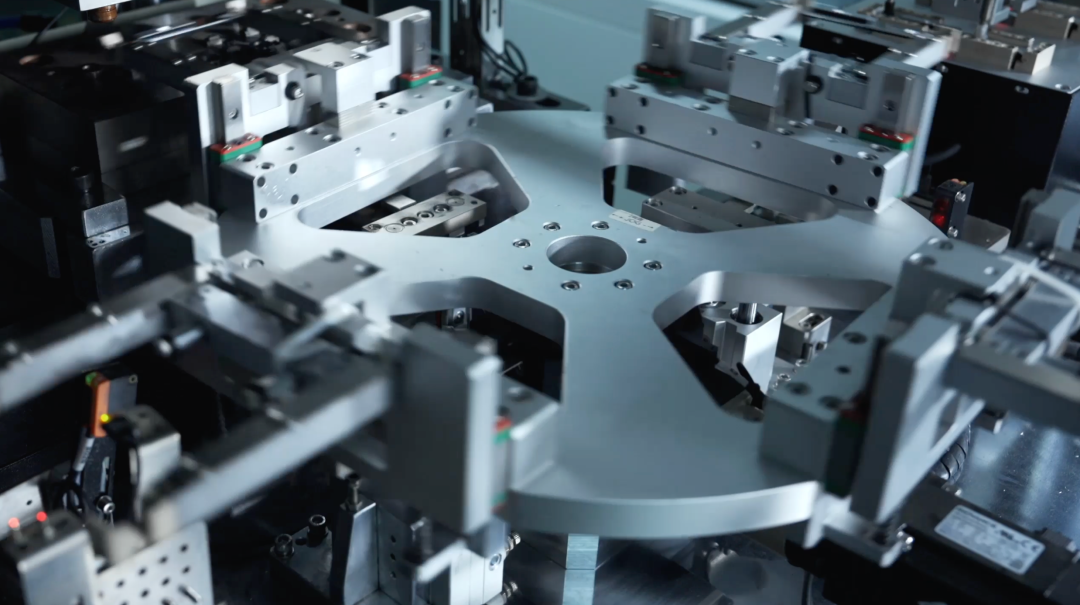
Downstream, fully automated cleaning lines strip away oil and residue before high-precision robotic arms feed components into assembly machines with exacting coordination. High-power laser welding then fuses terminal posts and riveting blocks into a single, robust unit.
From pre-riveting through precision riveting, from terminal post welding to final helium leak testing, poka-yoke mechanisms, CCD vision inspection, and automatic NG part rejection are built into every stage. Overhead, the MES system logs the material batch and process parameters of each individual unit in real time — so that every top cap that leaves the line carries a complete, traceable lifecycle record.
Refined Through Trial: Earning the Right to Be Called a Safety Component
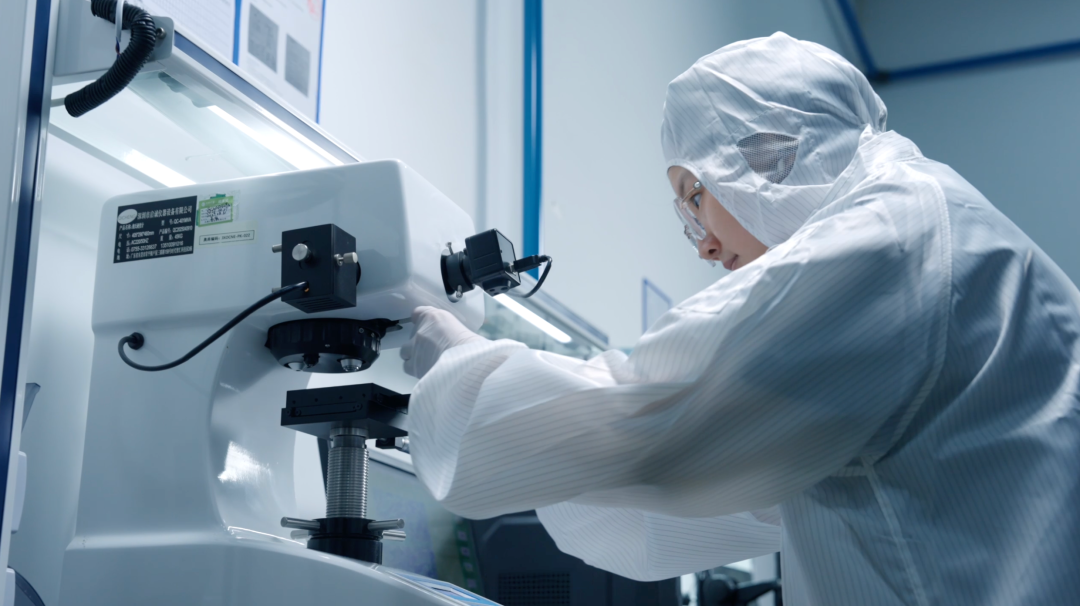
Verification doesn't stop when the line does. A 2.5D vision measuring instrument ensures dimensional accuracy across all products, while a Vickers hardness tester checks the hardness of every incoming material batch, keeping processing performance consistent from run to run. Internal resistance testers, resistance testers, insulation testers, and hipot testers then work through each product's electrical performance requirements, one by one.
In the testing laboratory, a burst testing machine puts safety vents through their paces, confirming they release at precisely the right pressure. A pressure cycling tester mimics the mechanical stress of repeated charge and discharge cycles. A salt spray chamber and thermal shock chamber push components to the limits of real-world operating conditions. Dynamic thrust and torque testers probe for any sign of long-term vibration fatigue. By the time a battery top cap clears every one of these checkpoints and walks out the factory door, it has genuinely earned its place in a safety-critical system.
Built on Thirty Years of Metal: Four Capabilities, One Natural Transition
ORG's entry into battery structural components was not a pivot born of opportunism. The company brings decades of hard-won expertise in housing material lightweighting, corrosion resistance, and strength control — know-how that translates directly and practically into battery casing manufacturing.
The operational foundation is substantial. With more than 80 manufacturing bases worldwide and over a hundred internationally advanced production lines, ORG has long mastered the discipline of large-scale automated manufacturing — and with that scale comes the purchasing leverage and production efficiency to keep costs firmly in check. Three decades of quality control experience, built up across millions of units and countless iterations, underpin the precision and consistency that battery customers demand. And in an industry where specifications are rarely standard and every customer needs something slightly different, ORG's ingrained culture of innovation and its proven ability to solve problems at the process level give it a meaningful advantage.
Zhou Yuan, Vice Chairman of ORG Technology, put it plainly: the company has taken four capabilities — automation and large-scale manufacturing, weight reduction and cost optimization, process innovation, and product quality control — refined over thirty years in metal packaging, and carried them directly into precision battery structural component manufacturing. That systematic transfer is not a talking point. It is the foundation on which ORG's confidence in this space is built.
The Second Growth Curve Is Taking Shape
There is something fitting about ORG finding its next chapter in Jingdezhen. Like the craftsmen who have worked this land for a thousand years, the people of ORG are defined by a single-minded commitment to forming things well. The material has changed. The application has changed. The thirty years of precision manufacturing instinct behind it has not.
Aoku New Energy is where that instinct is being put to work. It is not a concept or a pilot — it is a running facility, filling orders, refining processes, and raising its own bar. There is no hedging here, no half-measures. Only focus, and the acceleration that comes with it.
The kiln fires of Jingdezhen have always pointed forward. So does ORG's second growth curve — already rising, already real.